Travel & Shopping
Alaska Tips for Travel
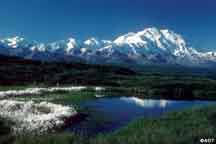
Alaska! The name alone invokes dramatic images of majestic mountains rising from the ocean, glaciers towering over shorelines, rushing rivers teeming with salmon, and grizzlies and caribou roaming freely in a vast wilderness. This truly is the Last Frontier. And for many, it is the vacation destination of a lifetime.
To help ensure that your experience in Alaska is a positive one, the Alaska Attorney General has some advice on how to plan and enjoy your trip.
Know before you go
- If booking your vacation online, remember that even if a website looks professional, you should still do your homework to make sure it is a legitimate business. Check to see that the website provides a physical location for the business, as well as a mailing address and phone number. If you have trouble reaching the business by phone, or if your emails are not answered in a reasonable period of time, consider taking your business elsewhere.
- Ask the business if you can get a free no-obligation quote in writing. Avoid businesses that won’t give you a written quote or ask for a payment prior to confirming your trip.
- When you purchase your trip through a booking agent, get your itinerary, confirmation number and proof of payment in writing, including the names, addresses, and telephone numbers of all the hotels where you will be staying, as well as any vendors of other services, such as boating excursions or guided tours. Independently confirm your reservations within 14 days of travel.
- Make all deposit and balance payments using a credit card. In the event of fraud, it is easier to obtain a refund. Try to avoid paying by wire transfer, check, money order, or cash, since these payment methods usually do not have the protections associated with credit cards.
- Many states have laws requiring sellers or promoters of travel-related services (generally referred to as “sellers of travel”) to register, post a bond or meet other financial criteria, and comply with other requirements designed to protect consumers. Check with your state consumer affairs agency or Attorney General’s Office to see if your state has such a law, and if it does, whether the person or business you are dealing with is registered.
- Make sure you understand all of the terms and conditions of your vacation package before you agree to purchase it and get in writing the cancellation and refund policy of any business you deal with, including booking agents, tour operators, and lodging providers. Some businesses may charge a fee for changes to your itinerary or may keep a portion of your deposit, even if you cancel months in advance.
- If you are comparing travel packages, you may find that some businesses provide a breakdown of the package price. If a business does not list individual prices for each service, consider asking for a breakdown of the package price.
- Some accommodations may be described as “rustic.” This can range from a luxury hotel with a log-cabin façade to an actual log cabin with an outhouse. Before you book a room, clarify what amenities—and utilities—are included.
- Pay attention to whether the business is seasonal, as many vendors may only be in Alaska during the summer tourist season (about May to September) and may shut their doors come autumn. If this is so, make sure you have an alternate, off-season business address and phone number.
- Ask for references, and find out how long the company has been in the tourism business and whether it actually provides the services, or contracts with others to provide them. Also helpful is an emergency contact number for the business that you can call if you experience problems while you are traveling.
- Consider purchasing travel insurance to cover trip cancellation or delay, lost luggage, or medical emergencies. Make sure, however, that you are not already covered under your existing medical, auto, or homeowner policies. Some credit-card companies also automatically provide travel insurance when you book your reservations using their charge card.
- Consider checking with the Better Business Bureau to make sure the business you are dealing with has a satisfactory record, by going to https://www.bbb.org/.
- For hunting trips, check to make sure your hunting guide is licensed with the State of Alaska by conducting a search at https://www.commerce.alaska.gov/cbp/main/.
Be aware while you’re here
- Shop smart! It can be difficult to distinguish arts and crafts produced by Alaska Natives from items that are imitations. Read the Alaska Native Art brochure for more information about how to identify authentic Alaska Native arts and crafts.
- When shopping, pay attention to return policies. Make sure you know the exceptions to any refund policies or guarantees. Some stores, especially those that cater to cruise-ship passengers, limit their guarantees to 30 days or do not give refunds for “buyer’s remorse,” and may give store credit instead of a refund.
- Weather can change at a moment’s notice. Planned excursions, such as kayak outings or flight-seeing tours, may be cancelled due to inclement weather, so it is a good idea to know the business’s weather-related cancellation and refund policy.
- Distances between towns may be much greater than you are used to, and the availability of gas stations may be more infrequent. If you are planning a driving tour, make sure your itinerary allows for opportunities to fill up.
When you return home
If you believe you have been the victim of an unfair or deceptive practice, you can file a complaint with the Alaska Attorney General’s office. If you have any questions call 907-269-5200, or toll free outside Anchorage at 1-888-576-2529.
[Alaska Tips for Travel - PDF Tri-fold Version1.34M]
To request full color copies of the Tips for Travel brochure, fill out the Brochure Request Form (PDF 711K) and submit it to the Alaska Department of Law.
Alaska Native Art

Alaska is famous for the rugged beauty of its mountains, rivers, and coastlines, as well as for the distinctive arts and crafts produced by Alaska Native artists. If you are considering purchasing an Alaska Native-made art or craft item, it's smart to invest a little time learning about the processes and materials Alaska Natives may use to make these unique and beautiful objects.
Identifying Arts and Crafts Made by Alaska Natives
Any item produced after 1935 that is marketed with terms like "Indian," "Native American," or "Alaska Native" must have been made by a member of a state or federally-recognized tribe or a certified non-member Indian artisan. That's the law.
A certified Indian artisan is an individual certified by the governing body of the tribe of his or her descent as a non-member Indian artisan
For example, it would violate the law to advertise products as "Inupiaq Carvings" if the products were produced by someone who isn't a member of the Inupiaq tribe or certified in writing by the tribal governing body as a non-member Alaska Native artisan of the Inupiaq people.
Qualifiers like "ancestry," "descent," and "heritage" - used in connection with the terms "Indian," "Alaska Native," or the name of a particular Indian tribe - do not mean that the craftsperson is a member of an Indian tribe or certified by a tribe. For example, "Native American heritage" or "Yupik descent" would mean that the artist is of descent, heritage, or ancestry of the tribe. These terms may be used only if they are truthful.
Buying Tips
Alaska Native arts and crafts are sold through many outlets, including tourist stores, gift shops, art galleries, museums, cultural centers, and the Internet. Here are some tips to help you shop wisely:
- Get written proof of any claims the seller makes for the authenticity of the art or craft item you're purchasing.
- Ask if your item comes with a certification tag. Not all authentic Alaska Native arts and crafts items carry a state certified tag. Those that do may display a Silver Hand symbol which features a silver hand and the words, "Authentic Native Handicraft from Alaska." Items may also carry a "Made in Alaska" emblem. This emblem certifies that the article "was made in Alaska," though not necessarily by an Alaska Native.
- Get a receipt that includes vital information about your purchase, including any oral representations. For example, if a salesperson explains the basket you're buying is baleen and ivory and handmade by an Inupiaq artist, insist the information is included on your receipt.
It can be difficult to distinguish arts and crafts produced by Alaska Natives from items that are imitations: Price, materials, appearance, and traditional subsistence materials are important clues to provenance.
- Price - Genuine Alaska Native art or craft items should reflect quality of craftsmanship, harmony of design, and the background of the artist. Genuine pieces produced by skilled Alaska Native artists can be expensive.
- Type of materials - Materials often used by Alaska Native artists include walrus ivory, soapstone, bone, alabaster, animal furs and skin, baleen, and other marine mammal materials.
- Appearance - Try to pick up and examine a piece before purchasing it. Some items that appear to be soapstone carvings may actually be made of resin. Real stone is cool to the touch; plastic is warm. Stone also tends to be heavier than plastic. A figure that is presented as hand-carved probably isn't if you see or can order 10 more like it that are perfectly uniform or lack surface variations.
Alaska Native Carvings
Sculptures and carvings by Alaska Natives vary in size, and often portray animals or people. Before you buy a carving, learning about mediums commonly used can help you authenticate work.
Marine mammal ivory is a popular and expensive medium used by Alaska Native carvers. New "white" ivory can have "breathing cracks," or thin black lines that occur naturally and should add to the beauty of the piece. By law, new marine mammal ivory may be carved only by Alaska Natives and sold only after it has been carved. Old ivory can be carved by non-Natives. Fossilized mammoth ivory may be used by Alaska Natives and non-Natives alike. Fossilized ivory is rare and more expensive. Because of the natural variation in fossilized ivory, no two carvings have the same pattern or color.
Soapstone is a soft rock with a soapy feel. Alaska Native artists may use it because it's widely available and easy to carve. Soapstone ranges in color from gray to green, and while it scratches easily, it also resists acids, chemicals, and heat.
Marine mammal bone, from whales and other marine animals, is used to create carvings and masks. Bone masks are made from the vertebrae or disk of whales, and range in color from light tan to dark brown. Bone items are lighter and more porous than ivory, and tend to be less expensive.
Alabaster, a white or translucent stone imported to Alaska, is used as a sculpture medium by some Alaska Natives.
Beyond Carvings
Alaska Native artists also produce baskets, dolls, drums, masks, prints, and etchings.
Baleen, a flexible material from the jaw of baleen whales, is used to make baskets, scrimshaw etchings, miniature ships and dioramas. Scrimshaw etchings often portray stories from the artist's unique culture; and are reminiscent of techniques introduced by Boston whalers in the 1800s.
Alaska dolls, handcrafted by many Alaska Native women, reflect unique styles. Dolls may portray daily activities of the artist's people. Doll clothes and bodies may be made from a variety of materials including calf skin (a caribou/reindeer hide replacement non-native to the area), mink, badger, sea otter, arctic rabbit, seal, or beaver. Sun bleached, dried marine mammal intestine, which is white or slightly yellowed and looks like wax paper, is sometimes used for clothing. Fur from musk ox, wolverine, and wolf are sometimes used for traditional doll clothing. Some doll makers use baleen or ivory inlay for the eyes.
Alaska Native prints are produced using a variety of techniques. Serigraphy, called screen printing or silk screening, involves printing through a surface, similar to a stencil technique. Relief print making is done from a raised surface, like cut stone, linoleum block, or wood block. Intaglio print making is created using the recessed image from the surface of etchings or engravings on metal plates of copper and tin. Lithography uses an oil-water resistance technique to print a design from stone or metal plates to paper.
For More Information
To learn more about Alaska Native arts and crafts, contact:
Alaska State Council on the Arts
411 West 4th Avenue, Suite 1E
Anchorage, AK 99501-2343
907-269-6610; fax: 907-269-6601
Toll-free: 1-888-278-7424
education.alaska.gov/aksca
Where to File a Consumer Complaint
The Indian Arts and Crafts Board (IACB) receives and refers valid complaints about violations of the Indian Arts and Crafts Act to the FBI for investigation and to the Department of Justice for legal action. To file a complaint under the Act, or to get free information about the Act, call the Indian Arts and Crafts Board, U.S. Department of the Interior, toll-free at 1-888-ART-FAKE (1-888-278-3253), or use the online complaint form. You also may write to the Indian Arts and Crafts Board at iacb@ios.doi.gov, or 1849 C Street, N.W., MS 2528-MIB, Washington, D.C. 20240.
Complaints to the IACB should include the following information:
- The name, address, and telephone number of the seller.
- A description of the art or craft item.
- How the item was offered for sale.
What representations were made about the item, including any claims that the item was made by a member of a particular tribe or statements about its authenticity.
Any other documentation, such as advertisements, catalogs, business cards, photos, or brochures. Include copies (NOT originals) of documents that support your position.
The Alaska Attorney General's Office investigates unfair and deceptive marketing and sales practices in Alaska. To obtain a complaint form, contact the Office of the Attorney General, Consumer Protection Unit, 1031 West 4th Avenue, Suite 200. Anchorage, AK 99501; 907-269-5100; toll-free (outside Anchorage, AK) 1-888-576-2529; or use the online complaint form.
The Alaska State Council on the Arts, Federal Trade Commission, U.S. Department of Interior's Indian Arts and Crafts Board, and Alaska Attorney General's Office have prepared this brochure to help enhance your appreciation for Alaska Native arts and crafts.
The FTC works for the consumer to prevent fraudulent, deceptive, and unfair business practices in the marketplace and to provide information to help consumers spot, stop, and avoid them. To file a complaint or to get free information on consumer issues, visit ftc.gov or call toll-free, 1-877-FTC-HELP (1-877-382-4357); TTY: 1-866-653-4261. The FTC enters consumer complaints into the Consumer Sentinel Network, a secure online database and investigative tool used by hundreds of civil and criminal law enforcement agencies in the U.S. and abroad.
[Alaska Native Art - PDF Tri-fold Version - 1.41M]
To request full color copies of the Alaska Native Art tri-fold brochure, fill out the Brochure Request Form (PDF 711K) and submit it to the Alaska Department of Law.